Free Consultation
1.800.TEAMLAW
1.800.832.6529
Free Consultation
1.800.TEAMLAW
1.800.832.6529

Free Consultation
1.800.TEAMLAW
1.800.832.6529
New Jersey
Motorcycle
Attorney
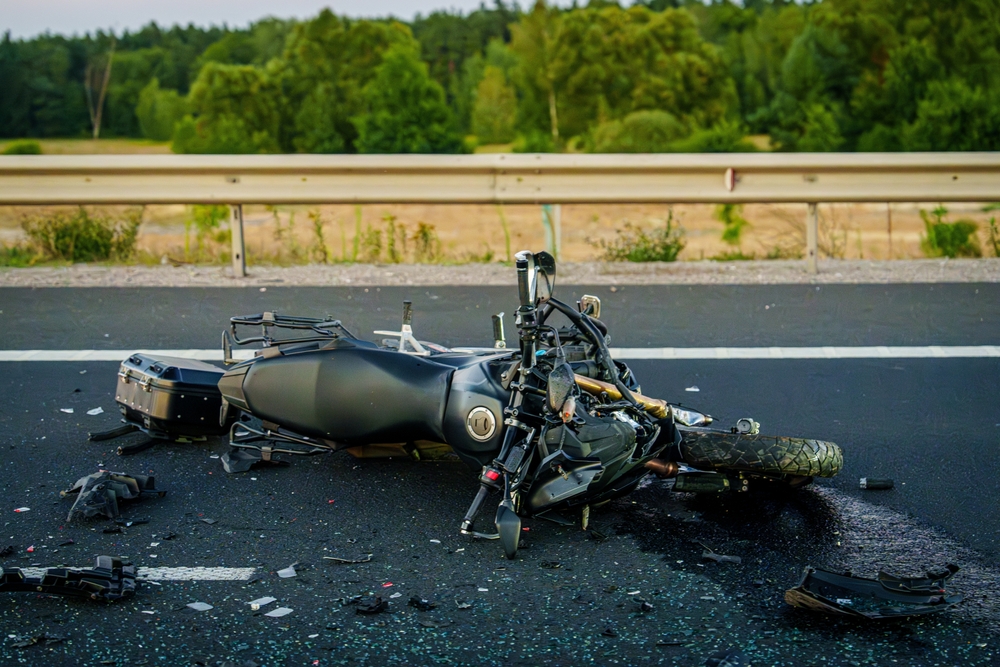
Let’s say we’re sitting across from each other and you just told me you were hit on your motorcycle.
You’re sore. You’re frustrated. You’re trying to figure out how you’ll pay the medical bills. Meanwhile, the insurance company is already building a file on you.
Here’s what most riders don’t realize: from day one, insurers are not just processing your motorcycle accident injury claim. They are actively looking for evidence that helps them limit what they pay.
If you understand what they look for first, you can protect yourself from costly mistakes. If you were injured in a crash, contact the Law Offices of Andrew S. Prince today through our online contact form to discuss your motorcycle accident injury claim and learn what steps you should take next.
Before they even call you, adjusters usually request the police report.
This document becomes the starting point of your motorcycle injury claim. They look at:
If the other driver was cited for failing to yield, that helps you. However, if the report hints that you were speeding or changing lanes aggressively, the insurer may argue you share fault under New Jersey’s modified comparative negligence rules.
Because of that, reviewing the police report early is critical. Small errors can create big problems later.
Similar Post: Why Do Police Quite Often Blame the Motorcycle Rider for the Crash?
One of the first questions insurers ask is simple: how soon did you see a doctor?
They look for a direct link between the motorcycle accident and your injuries. If there is a delay in treatment, they may argue:
That is why immediate medical documentation matters so much in a motorcycle injury claim. Emergency room records, diagnostic imaging, and follow-up appointments create a clear timeline. In addition, consistent treatment shows that your injuries require ongoing care.
Any gaps in treatment often become leverage for the insurance company.
Pictures often carry more weight than written statements.
Adjusters carefully review crash scene photos to determine:
The damage pattern on a motorcycle can reveal the angle and force of impact. That helps insurers reconstruct what happened.
If you are physically able, take photos immediately. If not, ask someone you trust to do it. Clear visual documentation makes it harder for the insurer to dispute how the crash occurred.
Insurance companies understand that drivers involved in a crash may blame each other. That is why they look for independent witnesses.
A neutral third party can:
When multiple witnesses tell the same story, it strengthens your motorcycle injury claim significantly.
However, timing matters. Memories fade quickly. That is why securing witness information early can make a real difference.
Insurers also examine the mechanical condition of your motorcycle.
They may ask:
If they find evidence of poor maintenance, they may argue you share responsibility.
For that reason, keeping maintenance records can protect you. Service receipts and inspection documentation help prove you maintained your bike responsibly.
Similar Post: What Road Hazards Cause Motorcycle Accidents in New Jersey and Who’s Liable?
Motorcycle injury claims in New Jersey work differently than standard car accident cases.
Most motorcycle policies do not include Personal Injury Protection (PIP) coverage. As a result, medical bills often involve health insurance or claims against the at-fault driver.
In addition, New Jersey follows modified comparative negligence. That means you can recover damages as long as you are not more than 50 percent at fault. However, your compensation decreases by your percentage of fault.
Because of this rule, insurers search aggressively for any detail that shifts blame onto you. Even a small percentage of fault reduces what they must pay.
If your injuries prevent you from working, insurers require proof.
They typically request:
They compare this information to your medical records. If your doctor did not formally restrict you from working, they may deny lost wage benefits.
Keeping organized documentation strengthens your position and limits disputes.
Many riders feel surprised when they learn insurers monitor public social media accounts.
Adjusters look for posts that appear inconsistent with your injury claims. For example, a photo of you attending an event could be misinterpreted as proof you are not in pain.
Even innocent posts can create complications. Therefore, limiting social media activity during an active motorcycle injury claim is often wise.
Soon after the crash, an adjuster may request a recorded statement.
They often frame it as routine. However, they listen carefully for uncertainty, inconsistencies, or comments that suggest shared fault.
You are not required to give a recorded statement immediately. Taking time to understand your injuries and the facts before speaking on record can protect your claim.
If your injuries are serious, insurers eventually shift their focus to long-term impact.
They evaluate:
Insurance companies sometimes rely on their own medical consultants to challenge your treating doctor’s opinions. That is why detailed, well-documented medical records remain essential throughout the life of your motorcycle injury claim.
Once you accept a settlement, you cannot request additional compensation later. For that reason, understanding your long-term prognosis before settling is critical.
Insurance companies begin investigating immediately after a motorcycle crash. They move quickly, gather evidence strategically, and look for ways to reduce liability.
You should approach your motorcycle injury claim with the same level of preparation.
The Law Offices of Andrew S. Prince understands exactly what insurers look for first in motorcycle injury claims throughout New Jersey, including West New York, Jersey City, and Newark. We focus on building strong, evidence-based cases that protect riders from unfair blame and undervalued settlements.
If you were injured in a motorcycle accident, contact the Law Offices of Andrew S. Prince today through our website or call 1-800-832-6529 to schedule a free consultation. The sooner you act, the better positioned you are to protect your rights and your recovery.
Disclaimer: This blog is intended for informational purposes only and does not establish an attorney-client relationship. It should not be considered as legal advice. For personalized legal assistance, please consult our team directly.
Appointment Only
313 State Street, Perth Amboy, NJ.
46 Bayard Street #211, New Brunswick, NJ.
201 East 5th Street, Plainfield, NJ.
822 Raritan Avenue, 1st Floor, Highland Park, NJ.
400 39th Street, Suite 407, Union City, NJ.
860 U. S. Highway 1 North, Suite 201, Edison, NJ.
50 Park Place, 8th Flr., Suite 840, Newark, NJ.



